Home / Products / Liquid Cooling / C-HH-01
Series C-HH-01
Liquid Cold Plate
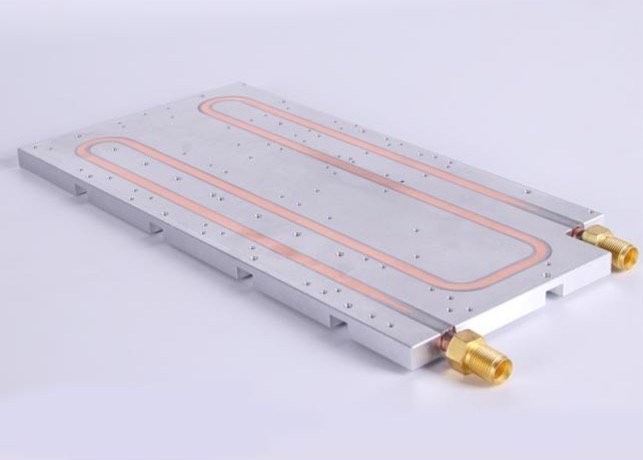
The core of a liquid cooling system: coolant runs through channels formed inside a metal plate and carries away the heat of electronics mounted on its surface.
200 W/cm²
Heat dissipation
2.5 MPa
Working pressure
−55 to +90 °C
Operating temperature
Al · Cu · Ti · SS
Plate materials
Overview
Heat out through the plate.
Components mount on the plate over a thermal interface material; coolant enters at the inlet, flows through the internal channels and leaves at the outlet with their heat.
Design advantages
- Optimized flow channel geometry for uniform temperature distribution
- Low thermal resistance and reduced flow pressure drop
- Robust welded structure for long service life and high reliability
- Vacuum brazed, friction-stir welded, embedded copper tube or deep-hole drilled
Technical specifications
Standard ranges — built to your requirement.
Values marked customizable can be changed to suit your application; outline and mounting are made to order.
Technical specifications
| Operating temperature | −55 to +90 °C |
| Heat dissipation | 200 W/cm² |
| Coolant | Coolant, deionized water and others |
| Construction | Vacuum brazing, friction stir welding, embedded copper tube, deep-hole drilling |
| Working pressure | 2.5 MPa |
| Plate material | Aluminum, copper or titanium alloy; stainless steel |
Gallery
Liquid Cold Plate in detail.
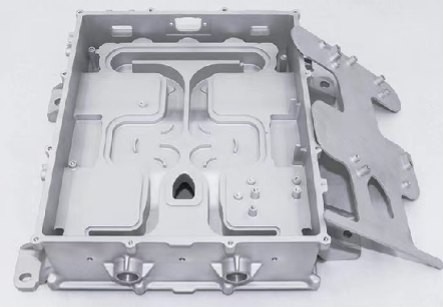
Machined housing with integrated coolant channels
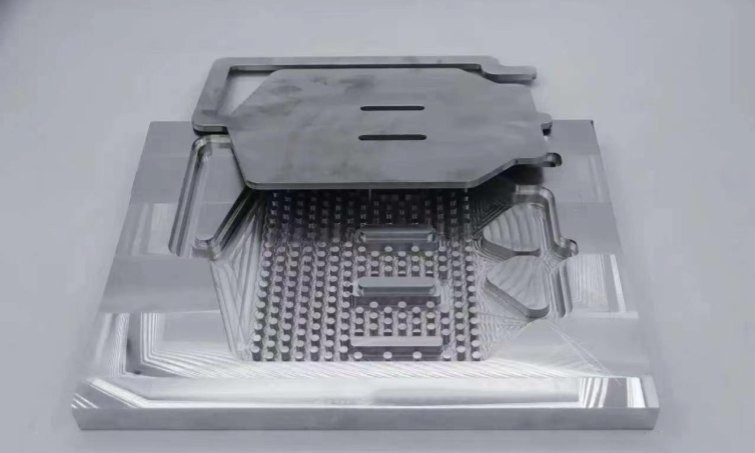
Micro-channel fin field before closing
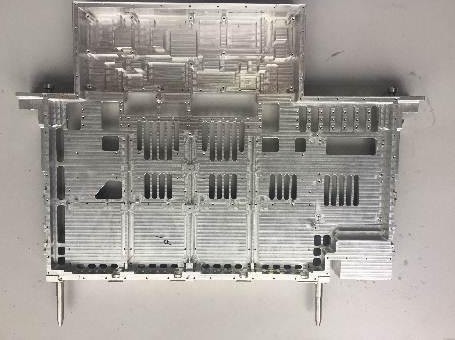
Micro-channel cold plate
Reference build
Micro-channel cold plate
Micro-channel plates are more complex than conventional cold plates and remove more heat from the same footprint.
| Construction | Vacuum brazing or friction stir welding |
| Coolant | 65# aviation coolant |
| Pressure test | 1.6 MPa for 30 min |
| Pressure drop | < 0.1 MPa |
| Heat flux | < 150 W/cm² |
| Fittings | Custom inlet and outlet |
Applications
Where it runs.
Power electronics and lasers
Inverters, drives and laser diodes.
Battery thermal management
Cell and module cooling plates.
Aerospace and military electronics
Conduction-cooled modules and radar electronics.
Automation and test benches
Industrial controllers and test equipment.
Specify your liquid cold plate.
Send the operating conditions and envelope. An engineer will recommend a configuration or quote a custom build.